Industrial Electrical & Power Systems
Fast-track machine line installations, shutdown execution, emergency power restoration, and industrial power distribution across the Carolinas.
Learn More →Electrical Services, Electric Motor repair/replacement, Transformer service and repair, Predictive and Preventative maintenance services — all from one company.
From line to load, our expert technicians troubleshoot, service, repair, and install electrical and mechanical equipment. In addition to electrical services and rotating apparatus repair, we provide transformer rewinding, RAMS® asset monitoring, viable spares management, and predictive maintenance services — A&W Electric is your trusted partner for comprehensive, plant-wide solutions.
Fast-track machine line installations, shutdown execution, emergency power restoration, and industrial power distribution across the Carolinas.
Learn More →AC/DC motor repair and rewind, pump repair, gearbox, blower service. Fast turnaround in our Charlotte service center. EASA member shop.
Learn More →High-value servo motor repair for Fanuc, Siemens, Yaskawa, Allen Bradley, Indramat, and Mitsubishi. CNC and industrial servo specialists.
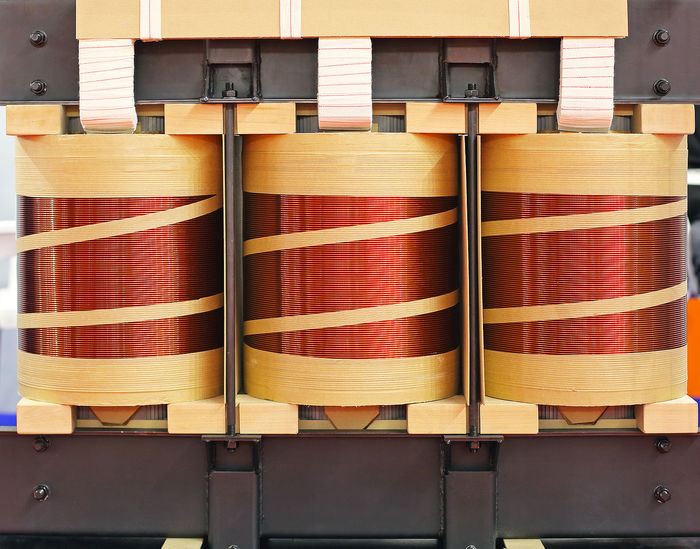
Learn More →Dry-type and oil-filled transformer repair, rewinding, testing, emergency services, and reverse engineering of obsolete units.
Learn More →Climate-controlled, EASA-standard managed storage. Monthly shaft rotation, quarterly testing, and 24-hour dispatch from stock. Your spares ready when you need them.
Learn More →New motors, pumps, and variable frequency drives from leading manufacturers at competitive pricing — sold, installed, and commissioned by A&W. We sell what we service.
Learn More →If your business has significant electrical infrastructure and rotating equipment — electric motors, centrifugal pumps, gearboxes, blowers, transformers, servo drives — we are your resource. A&W Electric is a unique industrial service provider that specializes in our clients’ process from line to load.
Our customers tell us they value fast response, on-schedule delivery, and straight communication throughout every project.
"A&W Electric has been our go-to electrical contractor for over a decade. Their response time when we have an emergency is unmatched, and their technical knowledge of our rotating equipment has saved us countless hours of downtime."
A&W Electric's Resource Center helps maintenance managers, reliability engineers, and plant managers make better decisions about their critical equipment.
The most common failure modes — and what to do before they take your process offline.
Read Article →A downloadable field checklist for annual transformer inspections.
Download Guide →A practical decision framework used by industrial reliability engineers.
Read Article →How to calculate the return on investment of a sensor-based monitoring program.
Download Guide →From emergency motor repair to long-term contracting — we respond fast and deliver quality.
Call 704.333.4986 Get a Free Quote Schedule a Shop TourIndustrial electro-mechanical specialists serving manufacturing, municipal, and commercial facilities throughout NC and SC since 1991.
A&W Electric, Inc. was founded in 1991 with a simple mission: deliver high-quality electrical and electro-mechanical services to industrial customers who can't afford shortcuts. Over three decades later, that mission drives everything we do.
Based in Charlotte, NC, we have grown from a regional electrical contractor into a comprehensive industrial services provider — repairing and rewinding electric motors, diagnosing and repairing servo motors, servicing pumps and gearboxes, repairing and rewinding transformers, installing and troubleshooting AC/DC drives, and deploying sensor-based predictive maintenance systems.
We are members of EASA (Electrical Apparatus Service Association), which means our motor repair practices meet rigorous industry standards. We are also active members of AWWA, NCRWA, SCRWA, and SC Waters — reflecting our deep experience in the water and wastewater sector.
A&W Electric provides a broad range of services under one roof:
What we value — and how we show it every day:
A&W Electric's leadership team brings deep expertise in industrial electrical systems, electro-mechanical repair, operations management, and customer service — united by a shared commitment to keeping your business running.
As President, Tim Hebert's job is to make sure A&W Electric is a company customers can count on — that the right people, standards, and capabilities are in place long before anyone picks up the phone. When he and his wife Holly purchased the company in 2001, he came from corporate operations, marketing, and sales, and set out to learn the work itself. He holds unlimited electrical contractor licenses in both Carolinas, immersed himself in rotating-equipment science through EASA, and has spent more than 20 years teaching maintenance professionals through the NC Maintenance Technologists school. That grounding shapes how A&W approaches a job. Customers need it fast, Tim will tell you, but what they really need is for it to be right — so the team asks questions until it understands the whole situation rather than the symptom in front of it, then lays out every practical option. A shortcut is never one of them. Under his leadership, A&W has grown from a small regional contractor into a diversified industrial services organization, including decades-long partnerships across the water and wastewater sector. Originally from Maine, Tim moved to Charlotte in 1994 and lives in Mint Hill with Holly; they have two grown sons and two grandchildren.
LinkedInAs Chief Operating Officer, Matt Nelson is responsible for building the people, processes, and operational discipline that drive A&W Electric's continued growth. He leads the company's Industrial Electrical Services and Industrial Equipment Repair divisions, helping customers execute their most critical projects safely, efficiently, and with minimal downtime. Since joining A&W Electric in 2012 to establish the Industrial Electrical Services Division, Matt has helped transform the company from a small regional contractor into a diversified industrial services organization serving customers throughout the Carolinas — building the Electrical Services Division into a multimillion-dollar operation before being promoted to Vice President of the Electrical Division and, in 2025, Chief Operating Officer. A licensed North Carolina Unlimited Electrical Contractor with 25+ years of experience, Matt has advanced from apprentice electrician to COO, bringing a practical understanding of every level of the organization. He believes great organizations are built by developing people, earning customer trust, and doing the right thing — and lives by a simple standard: "If it's an issue to the customer, it's an issue to us." Outside of work, Matt enjoys offshore fishing, boating, and spending time with his wife and two daughters in Lincoln County, North Carolina.
LinkedInAs North Carolina Field Operations Manager, Mike Jennings is responsible for A&W Electric's electrical division field operations — estimating the larger projects, managing the superintendents and project teams, and staying hands-on with field issues from start to finish. A licensed North Carolina journeyman with roughly 45 years in the trade, Mike is the team's go-to for major troubleshooting and complex installations — wire and breaker sizing, load calculations, motor control work, and the medium-voltage VFD commissioning that few others can tackle. His standout work includes a 4,000-amp switchgear changeout at a Charlotte-area pipe manufacturer completed inside a critical 12-hour shutdown window — finished in six — and building that plant's pipe machines from the ground up, with the entire electrical and control systems engineered in-house. Mike reads each customer's priorities — speed, quality, or price — with the conviction that quality supersedes the rest, so customers always feel they got a fair deal that matched what was promised. Competitive by nature, he enjoys hunting, fishing, the outdoors, and time with his children and grandchildren, based in York, South Carolina.
LinkedInAs South Carolina Field Operations Manager, Randy Maynard leads customer relations and field operations across the state's Upstate — Greenville and Spartanburg — and Columbia regions, staying close to customers by confirming quotes, scoping and pricing projects, scheduling work, and serving as the senior escalation point for customer issues. With 29 years across the electrical and automation industries, Randy spent 14 years running his own company — sharpening his management and customer-service instincts — before selling the business to Apex Controls. He's the go-to resource for automation and controls: machine wiring, panel building, control wiring, and troubleshooting, with fluency across Allen Bradley and Siemens PLCs, drives, Banner safety devices, and SEW motors, and he especially enjoys partnering with customer engineering teams on capital projects. Holding Michigan Journeyman and Master Electrical Licenses, Randy once led a two-week downtime install that delivered two months' worth of work in a single window, coordinating roughly 20 electricians and multiple subcontractors. He lives by a simple standard: 100% customer satisfaction. Born and raised in Holland, Michigan, and now living in Easley, South Carolina, Randy is an avid outdoorsman who enjoys camping, hiking, hunting, and fishing. He's been happily married to Crystal for 25 years, and the two love traveling together.
LinkedInAs Operations Manager of the Repair Division, Andrew Fulk oversees production and job-costing efficiency at A&W Electric's Charlotte service center, managing quoting, production timelines, and customer communication — and he's the person any repair-related customer problem ultimately lands on to resolve. Andrew's path to management runs straight through the shop floor: he started as a winder for electric motors, moved into business-to-business outside sales for rotating equipment repair, and joined A&W Electric in a sales role before stepping into operations, reaching his five-year anniversary with the company in 2025. That hands-on background makes him the team's go-to for problem-solving and "putting out fires," along with vendor management, job costing, quoting, and scheduling, with deep expertise in AC motors — as when he solved a complex issue for a major OEM whose fan motor kept tripping under load by redesigning the motor's winding to increase its horsepower and amperage, meeting the load requirement, boosting the customer's production, and eliminating downtime. Andrew holds an associate's degree in Electrical Systems from CPCC with a focus on motors, controls, and PLC programming, has completed leadership training, and carries EISA certifications. A relationship builder at heart, he takes a service-oriented, passionate approach focused on solving root problems rather than symptoms, so customers walk away feeling relief and confidence that their problem is truly solved. Originally from Raleigh and now living in Albemarle, North Carolina, Andrew is a dedicated family man who coaches his two sons' youth sports teams, especially football.
LinkedInAs Sales, Marketing & Innovation Manager, Mike Huber leads A&W Electric's sales and marketing efforts — including the creation and maintenance of this website — and drives the company's innovation agenda, applying AI and the latest technologies to keep A&W on the cutting edge. What sets his approach apart is a conviction that customers are best served by technically experienced people, not polished salespeople, so he focuses on developing knowledgeable team members who can walk a plant and genuinely solve problems. With more than 25 years in the industry, Mike spent 23 years running his own company, American MTS, which A&W Electric acquired in June 2025. His expertise centers on the operation and monitoring of rotating assets — the focus of RAMS®, the reliability platform he spent more than a decade developing. He is a named inventor on four U.S. patents from his earlier career at Surface Combustion, and studied computer science and engineering before completing a mechanical engineering path at the University of Toledo. Throughout his career, Mike has helped customers get back up and running when equipment failed unexpectedly, and he holds a simple philosophy: every customer visit should feel like a consultation, and if A&W can't provide real value, there's no reason to be part of the sale. A dedicated customer advocate with extensive customer-focused training, he lives by the belief that it's not about him and not about A&W — it's about the customer and their needs. Originally from Toledo, Ohio, Mike has called the Carolinas home since 2000 and enjoys golfing, boating, and the outdoors.
LinkedInAs an Account Manager for the Eastern Carolinas, Marty Griffin is responsible for one thing above all: consulting with customers, understanding their problems, and getting them back up and running. He covers the eastern parts of North and South Carolina, pairing deep technical knowledge with a maintenance manager's perspective on what keeps a plant running. With roughly 35 years in industrial equipment — including more than a decade focused on electric motors, drives, servos, pumps, and gearboxes — Marty began with an apprenticeship at Perfect Fit, rose into management for 25-plus years, then spent ten years in motor-shop sales at American MTS before joining A&W Electric in September 2025. Customers lean on him as a consultant — especially on the drive-and-motor compatibility issues that trip others up — and know he'll answer the call nights and weekends, because problems don't keep business hours. He serves a broad mix of industries, with particular focus on food processing, steel mills, municipalities, and industrial plants. Outside of work, Marty is an avid outdoorsman who loves being out on the water and an active leader in his church, serving as a deacon and assistant treasurer, based in Indian Trail, North Carolina.
LinkedInAs an Account Manager for the North and Central Carolinas, Bryan Sanchez is responsible for building customer relationships in the field and making sure downtime stays short across northeastern and central North Carolina, with some South Carolina. He brings a hands-on technical foundation to the sales side: at American MTS, Bryan worked his way up from the shop floor to field service and reliability work, developing real expertise in shaft alignments, motor changeouts, field balancing, and vibration — the kind of know-how that lets him solve problems others get stuck on, as when he dialed in a field-balancing job a customer couldn't get below five mils. He came into the trade through his father, a longtime mechanic, and joined A&W Electric in 2025. Bryan serves plastics, extrusion, fabrication, and coating facilities, working with each customer the way they prefer and keeping them in the loop at every step. His promise is simple: bring him any problem and he'll find a way to get it figured out. Born and raised in Monroe, North Carolina, Bryan stays fit outside of work — running, traveling, and training toward a future Ironman.
LinkedInA&W Electric operates two Charlotte facilities. Our Service Center at 4112 Pine Grove Circle, Charlotte, NC 28206 houses our motor, pump, and transformer repair operations along with shipping and receiving. Our Distribution & Administrative Center at 2311 Distribution Center Drive, Suite B, Charlotte, NC 28269 handles administration, inventory, and our Motor Storage Program.
From these two locations we serve customers throughout North Carolina and South Carolina — with onsite services available across our entire service territory.
EASA-member electro-mechanical service center in Charlotte, NC. Fast turnaround AC/DC motor repair, rewind, pump, gearbox, and rotating equipment service for industrial facilities throughout NC and SC.
A&W Electric's fully equipped Service Center in Charlotte, NC provides fast turnaround on repairs to AC and DC electric motors, pumps, gearboxes, blowers, and all rotating apparatus. As an EASA member, our repair practices follow industry-leading standards — ensuring every motor leaves our shop performing at or above OEM specifications.
Need new equipment? Our pricing is always competitive, and we install what we sell — giving you a single point of accountability from equipment selection through startup and commissioning.
We repair and rewind all types of AC induction motors — NEMA and IEC frame, single-phase and three-phase, totally enclosed (TEFC), open drip-proof (ODP), explosion-proof, and washdown-duty motors.
DC motor repair requires specialized expertise in armature winding, commutator service, and brush gear. A&W Electric handles the full range of DC motors used in industrial and process applications.
Medium voltage motors (2.3kV–15kV) are high-value assets critical to process operations. Our technicians are experienced in the specialized techniques required for safe and reliable medium voltage motor repair.
The above terms represent our primary organic search targets for this page.
EASA-member shop. Fast turnaround. Competitive pricing.
Call 704.333.4986 Get a QuoteHigh-value CNC and industrial servo motor repair for Fanuc, Siemens, Yaskawa, Allen Bradley, Indramat, Mitsubishi, and more. Specialized testing equipment and experienced technicians.
Servo motors are high-value, precision components at the heart of CNC machining centers, robotic arms, automated production lines, and precision process control systems. Unlike standard induction motors, servo motors incorporate encoders, resolvers, feedback systems, and precision windings that require specialized knowledge and test equipment to repair correctly.
A&W Electric provides comprehensive servo motor repair services with the technical expertise, tooling, and testing capabilities to restore your servo motors to full OEM performance specifications — getting your CNC equipment, robotics, and production lines back online quickly.
Don't see your brand? We service many additional servo motor manufacturers — contact us to confirm we can repair yours.
To get started quickly, have the following information ready: motor brand and model number, encoder type and part number if known, description of the failure or alarm code, and whether you need emergency or standard turnaround.
You can upload encoder photos and nameplate images using our contact form, or call us directly for immediate assistance.
Fanuc · Siemens · Yaskawa · Allen Bradley — we repair them all.
Call 704.333.4986 Upload Encoder Photo & QuoteIndustrial dry-type and oil-filled transformer specialists. Complete repair, rewinding, testing, emergency services, and a transformer repair partner program.
Transformers are at the heart of modern power systems. When a transformer fails — due to insulation breakdown, overheating, contamination, moisture, loose connections, vibration, or overloading — the cost of unplanned downtime is substantial. Professional transformer repair, rewinding, and testing services are critical for long-term reliability, safety, and efficiency.
A&W Electric provides comprehensive transformer repair services for dry-type and oil-filled units used in industrial, municipal, and commercial environments. Our skilled technicians deliver complete solutions both onsite and in our fully equipped repair center.
When a transformer failure occurs, rapid response is critical. A&W Electric provides expedited repair, onsite diagnostics, and temporary power solutions. Contact us immediately for emergency transformer support.
A&W Electric works with EASA member shops, electrical contractors, and industrial distributors as a transformer repair partner. If you encounter transformer repairs that fall outside your shop's capabilities — pad mount, medium voltage, oil-filled, specialty windings — we can serve as your white-label repair partner.
Partner inquiries: contact us via the form below or email mhuber@AandWElectric.com
Onsite oil-filled transformer maintenance, repair, oil processing, DGA testing, infrared thermography, and annual maintenance programs for industrial, municipal, and renewable energy sites.
Oil-filled transformers are critical to power distribution, industrial operations, municipal systems, and renewable energy installations. As solar farms and wind generation sites grow, the number of installed oil-filled transformers has increased dramatically — making proper maintenance essential for reliability and safety.
These units depend on high-quality insulating oil to provide cooling, dielectric protection, arc suppression, and moisture control. When transformer oil or internal components degrade, the risk of failure, downtime, and costly outages rises quickly.
A&W Electric offers structured annual maintenance programs including preventative and predictive maintenance, yearly field testing, detailed transformer health reports, and coordination with your reliability and maintenance teams.
Custom coil winding, transformer repair and rewinding, and precision diagnostic testing for industrial, commercial, and OEM applications.
Not all coils are standard — and not all winding shops understand the performance requirements of specialty magnetics. A&W Electric manufactures and rebuilds custom coils for applications where precision, durability, and electrical integrity are critical.
We design and wind coils for industrial control circuits, transformers and autotransformers, inductors, reactors, and chokes, motor starting and power-conditioning equipment, high-temperature and high-vibration environments, and legacy systems requiring discontinued coils.
Centrifugal pump repair, rebuild, and sales — plus gearbox and blower service — from our Charlotte, NC electro-mechanical service center.
Can't move your equipment? We come to you. Onsite electro-mechanical repair, troubleshooting, and maintenance throughout NC and SC.
A&W Electric is uniquely prepared to handle onsite repairs and maintenance for your electro-mechanical equipment. Large motors, pumps, and industrial systems cannot always be easily disconnected and transported to a service center. Our field technicians arrive equipped to diagnose, repair, and verify performance on your equipment in place — minimizing your downtime.
When critical equipment fails, every hour of downtime costs money. A&W Electric provides emergency onsite response throughout NC and SC. Call us and we dispatch a qualified technician as fast as possible.
Industrial Electrical, Machine Line Installation & Emergency Power Restoration — serving manufacturing and process facilities throughout the Carolinas.
A&W Electric specializes in fast-track industrial electrical installations, machine line integration, critical shutdown execution, and emergency power restoration for manufacturing and process facilities throughout the Carolinas.
Complete electrical installation of new production lines and manufacturing equipment — power distribution, controls wiring, field I/O installation, startup support, commissioning assistance, and troubleshooting during production launch.
Learn More →Installation and modification of switchgear, MCCs, transformers, busway systems, feeders, large conduit systems, facility power upgrades, and electrical infrastructure supporting industrial operations.
Learn More →Execution of planned shutdowns and outages under compressed schedules. Multi-shift and around-the-clock support designed to minimize downtime and return facilities to production quickly and safely.
Learn More →Rapid response to major electrical failures. Large-scale manpower mobilization, expedited material procurement, temporary power solutions, emergency repairs, and 24/7 recovery operations until power and production are restored.
Learn More →Field controls wiring, PLC support, startup troubleshooting, sensor integration, machine control diagnostics, and production support services for manufacturing facilities.
Learn More →Electrical installations inside active manufacturing facilities with careful coordination around existing operations to minimize disruption while maintaining safety and production continuity.
Learn More →We specialize in compressing installation schedules to help manufacturers bring production online faster.
Our ability to mobilize manpower quickly allows us to support critical outages, shutdowns, and emergency repairs.
Our teams understand industrial power systems, machine integration, controls infrastructure, and manufacturing operations.
Strong supplier relationships help us source critical equipment and materials quickly during time-sensitive projects.
Everything we do is focused on minimizing downtime and restoring production safely and efficiently.
Fully licensed and insured electrical contractor in North Carolina and South Carolina. Competitive pricing with no compromise on quality or safety.
Whether you are installing a new production line, planning a critical shutdown, expanding an existing facility, or responding to an unexpected electrical failure — A&W Electric has the experience, manpower, and resources to keep your operation moving.
Call 704.333.4986 Discuss Your ProjectMulti-shift, around-the-clock shutdown support designed to compress schedules, minimize downtime, and return your facility to production safely and efficiently.
Industrial shutdowns are high-stakes, time-compressed events. Every hour of planned downtime is a cost — and every overrun is a crisis. A&W Electric specializes in executing electrical scope during planned outages under compressed schedules, providing the manpower, coordination, and technical expertise to complete work on time and return your facility to production.
We staff shutdowns with multiple shifts when the schedule demands it — keeping work moving around the clock without the quality drop-off that comes from fatigued crews. Our supervisors maintain continuity across shifts so no time is lost to handoffs.
We work from your shutdown schedule and integrate with your maintenance team, contractors, and OEM representatives. Our pre-shutdown planning process identifies material needs, manpower requirements, and sequencing well in advance so the outage window is spent executing — not scrambling.
Multi-shift capability, strong manpower, and industrial-focused expertise.
704.333.4986Plan Your ShutdownElectrical installations inside active manufacturing facilities — coordinated carefully around existing operations to maintain safety and production continuity.
Brownfield installations — electrical work inside operating plants — demand a different level of discipline than greenfield construction. Production cannot stop. Existing systems cannot be disrupted. Workers and equipment must be protected. A&W Electric has the experience to execute complex electrical installations inside active manufacturing environments safely and efficiently.
Working around active production requires strict coordination, lockout/tagout discipline, and constant awareness of plant operations. Our supervisors are experienced in brownfield environments and understand how to sequence work to minimize disruption while maintaining schedule and quality.
We integrate with your facility safety program, work within your permit systems, and coordinate daily with your operations and maintenance teams. Our goal is to be invisible to production while delivering the electrical scope on time and to specification.
Brownfield expertise — active facilities, coordinated installations, no disruptions.
704.333.4986Discuss Your ProjectNew construction, equipment relocation, lighting, and full industrial electrical project management across NC & SC.
A&W Electric manages industrial electrical projects from design through final inspection. Our licensed electricians understand the unique demands of manufacturing environments — clean power, motor loads, VFD harmonics, and process control — not just commercial wiring.
VFD installation and programming, soft starters, motor control centers, and industrial automation support.
A&W Electric's electricians are experienced with the full range of industrial control equipment — from basic starters to complex VFD networks with PLC integration. This technical depth, combined with our electro-mechanical background, means we can troubleshoot problems that other contractors can't.
Main service upgrades, switchgear, panelboards, bus duct, and electrical distribution systems for industrial and commercial facilities.
Reliable power distribution is the backbone of every industrial facility. A&W Electric designs, installs, and maintains the complete power distribution infrastructure — from the utility entrance to individual machine connections.
Rapid response for electrical failures in industrial and commercial facilities. Call 704.333.4986 for immediate assistance.
When your plant's electrical system fails, every hour of downtime has a real cost. A&W Electric provides emergency response for industrial and commercial electrical failures throughout NC and SC. Our experienced electricians troubleshoot and restore power quickly and safely.
Predictive maintenance without the capital investment. A&W Electric installs, owns, monitors, and maintains everything — you get continuous asset-health insight, monthly reports, and a dedicated team of specialists watching your critical equipment.
Move from reactive to proactive maintenance — with none of the upfront cost, hardware headaches, or specialized staffing. RAMS® as a Service turns predictive maintenance into a simple monthly subscription, fully managed by A&W Electric.
RAMS® as a Service is a fully managed reliability program. A&W provides the hardware, the expertise, and the ongoing monitoring, so your team can focus on running the plant.
No CapEx, no equipment to purchase, no depreciating assets on your books. A simple operating-expense subscription gets you a complete predictive-maintenance program.
Your assets are watched by A&W Electric's electrical and vibration specialists — real experts interpreting the data, not just software throwing alerts.
All sensors, gateways, and monitoring hardware are supplied, installed, provisioned, and maintained by A&W. If a device needs service or replacement, we handle it.
Vibration, temperature, current, pressure, flow, humidity, ultrasonic sound, level, and more — the sensor-agnostic RAMS® platform monitors whatever matters for each asset.
Every month you receive a clear report on the health of your monitored assets — trends, developing concerns, and recommended actions, reviewed by our specialists.
You get direct access to the RAMS® platform and mobile app — view live data, history, and asset condition anytime, from anywhere. Your data belongs to you.
A dedicated A&W account representative knows your plant and your equipment — a single point of contact for questions, reviews, and planning.
When RAMS® flags a developing problem your team can't address, A&W's field technicians provide onsite troubleshooting and repair — the same company, end to end.
We identify your most critical assets and the metrics that predict their failures.
A&W provides and installs all sensors and gateways, then provisions and tests the system.
Our specialists watch your equipment continuously and interpret the data as it comes in.
You get monthly reports and alerts — and onsite repair support whenever you need it.
RAMS® — the Reliable Asset Management System — began in 2017 as a sensor dashboard for vibration and temperature monitoring and has grown into a comprehensive asset-management platform. It catalogs machines and components, schedules recurring PMs, tracks spare-parts inventory, and creates work orders, with a mobile app that lets technicians scan an asset's QR code and log any type of data or completed task.
One of the platform's key strengths is that it's sensor-agnostic — not tied to any single brand or sensor type. That lets A&W deploy the best, latest sensing technology for each application and monitor a wide range of metrics: vibration, temperature, current, pressure, flow, humidity, ultrasonic sound, level detection, and more.
Building a predictive-maintenance program in-house means buying hardware, standing up software, and hiring or training vibration and reliability specialists — a significant investment before you see a single insight. RAMS® as a Service removes those barriers: A&W already has the platform, the hardware supply chain, and the specialists. You get a mature, expert-run program from day one, scaled to exactly the assets you care about, for a predictable monthly cost.
Let A&W's specialists monitor your critical assets while your team runs the plant.
704.333.4986 Get Started TodayTechnical articles, downloadable guides, and educational videos for maintenance managers, reliability engineers, and plant managers. A&W Electric — your industrial reliability resource.
Published approximately monthly. Topics cover electric motors, transformers, servo motors, pumps, and predictive maintenance.
The most common motor failure modes — insulation breakdown, bearing failure, overloading, and more — and what to do before they take your process offline.
Read Article →Encoder failures are the #1 cause of servo fault alarms on CNC machines. Learn the causes, symptoms, and repair options.
Read Article →How to detect transformer insulation degradation before it leads to a catastrophic failure and unplanned outage.
Read Article →Cavitation is one of the most damaging and misunderstood pump failure modes. This article explains the causes and how to fix them.
Read Article →How to calculate the return on investment of a sensor-based predictive maintenance program — with a real-world example.
Read Article →How to read a failed bearing and determine whether the root cause was contamination, misalignment, overload, or electrical damage.
Read Article →Why an unmanaged spare motor is a liability, not insurance — and what a properly maintained storage program requires to ensure a viable spare.
Read Article →Practical reference materials for your maintenance and reliability program.
Professionally managed off-site storage with monthly shaft rotation, quarterly Megger testing, and 24-hour delivery from stock.
Learn About Storage →Proper procedures for storing spare electric motors to prevent bearing damage, insulation degradation, and corrosion.
Request Guide →A field-ready checklist for annual transformer inspections covering oil, cooling, bushings, connections, and electrical tests.
Request Checklist →A structured template for ranking your plant assets by criticality — used to prioritize monitoring and maintenance investments.
Request Template →An introduction to vibration analysis, ultrasonic monitoring, thermal imaging, and how to build a proactive reliability strategy.
Request Guide →Educational videos covering motor repair, transformer service, ultrasonic lubrication, and laser alignment are on the way.
Our video library is in production. Check back soon for educational content on motor repair, transformer diagnostics, predictive maintenance, and more.
Fill out the form below and we'll send you the guide directly. No spam — ever.
Hear from the industrial, municipal, and commercial facilities that have trusted A&W Electric for over three decades.
"A&W Electric has been our go-to electrical contractor for over a decade. Their response time when we have an emergency is unmatched, and their technical knowledge of our rotating equipment has saved us countless hours of downtime."
"We needed a contractor who could handle both the electrical work and the motor repair side of a major equipment relocation. A&W handled it all seamlessly. Their team communicates well and always delivers on schedule."
"Honest, knowledgeable, and they actually answer the phone. A&W Electric is the only electrical contractor we call for our facility. They understand our systems and treat our operation with the urgency it deserves."
"The RAMS monitoring system A&W installed has been a game-changer for our preventive maintenance program. We caught two developing bearing failures before they became catastrophic. The ROI was realized within the first year."
A&W Electric is a growing industrial electrical services company looking for skilled technicians and electricians who take pride in their work.
We're looking for talented people who share our Core Values: Get It Done, Technical Excellence, Superior Service, and Straight Talk.
Licensed electricians with industrial experience. VFD and motor controls experience preferred. NC or SC license a plus.
Service center technicians skilled in electric motor repair, pump rebuild, and rotating equipment. Winding experience a plus.
Field technicians for onsite electrical and mechanical repair. Industrial environment experience required. Valid driver's license required.
Experience with transformer repair, oil processing, or coil winding preferred. Will train qualified candidates with strong electro-mechanical background.
See how your equipment gets repaired. Bring your maintenance team through our Charlotte service center and walk the floor with the technicians who do the work.
Tours typically run about an hour and can be tailored to what your team cares about most. We can also combine a tour with a lunch & learn session for larger groups.
Closed-toe shoes required. Safety glasses provided.
Charlotte Service Center
4112 Pine Grove Circle
Charlotte, NC 28206
A shop tour is the fastest way to understand how we repair your equipment — and why it lasts.
704.333.4986Ready to talk? Call us, email us, upload a nameplate photo, or fill out the form below. We respond quickly and give you straight answers.
4112 Pine Grove Circle
Charlotte, NC 28206
Motor, pump & transformer repair shop — shipping & receiving
2311 Distribution Center Drive, Suite B
Charlotte, NC 28269
Administration, inventory & motor storage program
North Carolina · South Carolina
Your spare motors, protected & ready. An active reliability investment — maintained, documented, and ready to perform the moment you need them.
Motors sitting unmanaged in your facility — on dirty floors, near vibrating equipment, exposed to moisture and pests — are not true spares. They are liabilities. When failure strikes, an untested, degraded spare can make a bad situation catastrophic.
A&W Electric's off-site Motor Storage Program is an active reliability investment, not just a parking spot. Your assets are maintained, documented, and ready to perform the moment you need them.
We also store new motors — whether purchased as planned spares or awaiting scheduled installation — protecting your investment from day one.
Real-World Scenario
"The spare gets installed — then fails after nine days. It had been sitting untouched for years. Every minute of downtime costs money."
— The hidden danger of unmanaged critical spares
Every motor repaired by A&W Electric is covered by a warranty that starts from the date of delivery back to your facility — not the repair date. Motors stored with us receive extended coverage, up to five years on qualifying repaired units.
1 Year Standard · Up to 5 Years Extended · Starts at Delivery · All A&W Repaired Motors
Dedicated storage free from shop floor contamination, coolant, dust, and chemical exposure that degrades insulation and bearing integrity over time.
Motors stored near running equipment develop brinelling — false damage in bearings from vibration. Our isolated facility eliminates this hidden failure mode before it starts, and every stored unit sits on vibration-absorbing rubber isolation matting for an additional layer of protection.
Rodent-chewed windings and nesting debris inside motor housings are a leading cause of unexpected failures. Our secured facility maintains strict pest exclusion protocols.
Each motor is logged with nameplate data, repair history, and condition records. Know exactly what you have, its status, and when it was last inspected — instant access when needed.
Stored motors receive monthly shaft rotation — the manufacturer-recommended interval — to prevent flat spots and false brinelling. Insulation resistance is tested quarterly, so you always know your spare's true condition.
Returned repairs are inspected and electrically tested before entering storage. We certify your spare is genuinely viable — not just assumed to be — before it goes on the shelf.
Regular, pre-arranged deliveries to your facility at no charge. We coordinate around your schedule so your team has the right motor on hand exactly when planned maintenance calls for it.
When an unplanned failure can't wait, we offer 24-hour emergency delivery of your stored motor. Fast access to your spare when downtime pressure is highest — additional delivery fee applies.
Internal space heaters keep winding temperature slightly above ambient, preventing moisture condensation inside motor housings. Critical for high-humidity environments and long-term storage of larger frames.
Full temperature and humidity-regulated storage for high-value, specialty, or sensitive motors. Maintains ideal conditions year-round, maximizing insulation life and bearing integrity during extended storage.
Download the full two-page overview — real-world scenarios, storage standards, warranty details, and optional upgrades.
Don't let an unmanaged spare become your next unplanned shutdown.
Call 704.333.4986 Request a Storage QuoteA wide selection of new AC and DC motors from the industry's leading manufacturers at very competitive pricing. Our sales engineers guide you to the right selection.
A&W Electric has partnered with leading motor manufacturers and distributors to offer a wide selection of new motors at very competitive pricing. You can browse by catalog number or let our sales engineers guide you to the correct selection. It's important to remember that most newer motors are required to meet current US efficiency standards (NEMA Premium / IE3) and may have changed frame sizes or have an extended space requirement.
Browse by catalog number or contact our sales team with your HP, voltage, frame size, enclosure type, and application details for a fast competitive quote.
When you buy equipment from A&W Electric, we install it — ensuring proper alignment, electrical connection, startup testing, and commissioning. You get a single point of accountability from selection through production.
Contact our sales team with your specifications — HP/kW, voltage, frame, enclosure, and application details — and we'll provide a competitive quote quickly.
Let our sales engineers find the right product for your application.
704.333.4986Request PricingNew pump and blower sales from leading manufacturers at special pricing — plus repair capabilities for nearly any brand.
In addition to repairing nearly any brand of pump or blower, A&W Electric offers special pricing on new pumps from the industry's leading manufacturers. Whether you need a centrifugal pump for a water treatment application, a submersible for wastewater, or a positive displacement blower, our sales team can source the right product quickly.
Provide your flow rate, head, fluid type, and installation details and our sales team will respond with a competitive quote.
When you buy equipment from A&W Electric, we install it — ensuring proper alignment, electrical connection, startup testing, and commissioning. You get a single point of accountability from selection through production.
Contact our sales team with your specifications — HP/kW, voltage, frame, enclosure, and application details — and we'll provide a competitive quote quickly.
Let our sales engineers find the right product for your application.
704.333.4986Request PricingVFD sales from leading manufacturers — supplied, installed, programmed, and commissioned by our licensed electricians.
A&W Electric supplies and installs Variable Frequency Drives (VFDs) from the industry's leading manufacturers. Every drive we sell is installed by our licensed electricians and programmed and commissioned by our team — giving you a single point of accountability from specification through startup. We have experience with pump, fan, compressor, and process equipment applications across a wide range of HP and voltage ratings.
The Galt G500 Series delivers approachable, reliable performance from 1 to 700 HP in 240V, 480V, and 600V classes — with sensorless and closed-loop vector control, multiple braking options, broad communication protocols, US-based support, and a 3-year warranty. A&W Electric supplies, installs, programs, and commissions Galt drives.
↓ Download the Galt G500 Brochure (PDF)Provide your motor HP, voltage, application type, and any communication requirements and our team will recommend the right drive at a competitive price.
When you buy equipment from A&W Electric, we install it — ensuring proper alignment, electrical connection, startup testing, and commissioning. You get a single point of accountability from selection through production.
Contact our sales team with your specifications — HP/kW, voltage, frame, enclosure, and application details — and we'll provide a competitive quote quickly.
Let our sales engineers find the right product for your application.
704.333.4986Request PricingComplete repair, rewind, testing, storage, and predictive maintenance solutions for industrial rotating equipment and transformers — serving NC and SC since 1991.
A&W Electric's electromechanical service center delivers fast-turnaround repair for electric motors, servo motors, transformers, pumps, and gearboxes — backed by EASA-standard practices, professional asset storage, and sensor-based predictive maintenance to keep your facility running.
AC/DC motor repair and rewind, pump repair, gearbox and blower service. EASA-member shop in Charlotte, NC. Fast turnaround, full testing before delivery.
Learn More →CNC and industrial servo motor repair — Fanuc, Siemens, Yaskawa, Allen Bradley, Indramat, Mitsubishi. Encoder replacement, rotor service, full testing.
Learn More →Climate-controlled managed storage with monthly shaft rotation, quarterly Megger testing, and 24-hour dispatch from stock. Your spares ready when you need them.
Learn More →Dry-type and oil-filled transformer repair, rewinding, testing, emergency services, and reverse engineering of obsolete units. Partner program available for EASA shops.
Learn More →Onsite oil-filled transformer maintenance, oil processing, DGA testing, IR thermography, LTC servicing, and structured annual maintenance programs.
Learn More →Custom specialty coil winding, transformer coil rebuilds, VPI processing, insulation upgrades, and reverse-engineering of discontinued or obsolete coil designs.
Learn More →Centrifugal pump repair, rebuild, and sales. Gearbox inspection and rebuild. Blower service. Dynamic balancing. Machine shop services for shafts and bores.
Learn More →Can't move your equipment? We come to you. Field repair, VFD and controls service, IR thermography, equipment relocation, and 24/7 emergency response.
Learn More →Sensor-based asset management. Real-time vibration, temperature, and process monitoring. Cloud or local deployment. Mobile app. Work order management included.
Learn More →EASA-standard repair practices. Every motor leaves our shop tested and documented.
We understand downtime costs money. Our service center is set up for speed without shortcuts.
Motors, servos, transformers, pumps, gearboxes — one shop, one relationship, one call.
Serving industrial, municipal, and commercial customers throughout NC and SC since 1991.
When critical equipment fails, we respond fast — field technicians dispatched day or night.
New motors, pumps, and variable frequency drives from leading manufacturers — competitive pricing, expert selection guidance, and installation by the same team that repairs your equipment.
A&W Electric has partnered with leading manufacturers and distributors to offer a wide selection of new motors, pumps, and drives at very competitive pricing. Our sales engineers can guide you to the correct selection — and we install what we sell.
Partnered with the leading motor manufacturers and distributors. Browse by catalog number or let our sales engineers guide your selection. Most new motors meet current US efficiency standards (NEMA Premium / IE3) and may have updated frame sizes.
In addition to repairing nearly any brand of pump or blower, A&W Electric offers special pricing on new pumps from leading manufacturers.
A&W Electric supplies and installs VFDs from leading manufacturers. Our electricians program and commission every drive we sell — one point of accountability from selection through startup.
EASA-standard repair practices. Every motor leaves our shop tested and documented.
We understand downtime costs money. Our service center is set up for speed without shortcuts.
Motors, servos, transformers, pumps, gearboxes — one shop, one relationship, one call.
We sell new equipment at competitive prices and install what we sell — one point of accountability.
Serving industrial, municipal, and commercial customers throughout NC and SC since 1991.
When critical equipment fails, we respond fast — field technicians dispatched day or night.
The most common motor failure modes — insulation breakdown, bearing failure, overloading, and more — and what to do before they take your process offline.
Technical Article
An electric motor rarely fails without warning. Nearly every failure traces back to one of a handful of root causes — and most are detectable, and preventable, long before they shut down your line. Here are the seven most common, what causes them, the warning signs, and what to do about each.
The winding insulation is the heart of a motor's electrical integrity, and its breakdown is one of the leading causes of failure. Over time, heat, moisture, chemical contamination, voltage spikes, and simple age degrade the insulation between windings and to ground. Once it weakens enough, you get a turn-to-turn short, a phase-to-phase short, or a ground fault — and the motor is down.
Warning signs: falling insulation resistance (Megger) readings, tripped ground-fault protection, a burnt-insulation smell, or intermittent tripping under load.
What to do: Trend insulation resistance over time rather than relying on a single reading — a downward trend is your early warning. Keep motors clean and dry, address moisture sources, and protect against voltage transients. When resistance drops below safe thresholds, schedule a rewind before it becomes an unplanned outage.
Bearings are responsible for an estimated half of all motor failures. They fail from improper lubrication (too much, too little, or the wrong grease), contamination, misalignment, vibration, and normal wear. Because a failing bearing generates heat and vibration that damages the rest of the motor, catching it early matters enormously.
Warning signs: rising vibration levels, audible noise (growling, grinding), elevated bearing-housing temperature, or grease leakage.
What to do: Follow a disciplined lubrication schedule with the correct grease and quantity. Monitor vibration and temperature — this is exactly where sensor-based predictive maintenance pays for itself, flagging a degrading bearing weeks before failure. Address misalignment and imbalance promptly, since both drive bearings to early graves.
When a motor is asked to deliver more torque than it's rated for, it draws excess current and overheats. Sustained overloading cooks the insulation and shortens motor life dramatically — a rule of thumb holds that every 10°C of additional winding temperature roughly halves insulation life.
Warning signs: overload relays tripping, higher-than-nameplate current draw, elevated motor temperature, or a process change that increased the load.
What to do: Verify the motor is correctly sized for the actual load, and confirm overload protection is set properly. Investigate any mechanical changes — a worn pump, a tightening bearing, or a process change — that may be raising the load beyond design.
Motors are sensitive to the quality of the power feeding them. Voltage imbalance between phases, under- or over-voltage, harmonics, and transients all generate excess heat and stress. A voltage imbalance of just a few percent can produce a disproportionately large current imbalance and localized overheating in the windings.
Warning signs: unequal phase currents, excess heat with no obvious mechanical cause, nuisance tripping, or humming.
What to do: Measure voltage at the motor terminals across all phases under load. Correct imbalance at its source, address loose connections, and evaluate harmonics where VFDs and non-linear loads are present. Clean, balanced power is one of the cheapest forms of motor life extension.
Dirt, dust, moisture, oil, and chemical exposure are silent motor killers. Contamination clogs cooling passages and causes the motor to run hot, coats windings and accelerates insulation breakdown, and works its way into bearings where it destroys them. In dusty or wet environments, contamination is often the dominant failure mode.
Warning signs: visible buildup on the motor exterior and vents, elevated running temperature, or repeated bearing and insulation issues in a harsh environment.
What to do: Match the motor enclosure to the environment (TEFC, washdown-duty, etc.), keep cooling surfaces and vents clean, and seal out moisture and contaminants. For critical spares, proper storage matters just as much as in-service protection.
When a motor shaft isn't precisely aligned with the driven equipment — or when a rotating component is out of balance — the resulting forces hammer the bearings, seals, and shaft. Misalignment and imbalance are among the most common mechanical root causes of premature bearing and coupling failure.
Warning signs: vibration (often at characteristic frequencies), coupling wear, repeated bearing failures, or seal leakage.
What to do: Use precision laser alignment rather than straightedge-and-feel methods, and balance rotating assemblies to spec. Vibration analysis can distinguish misalignment from imbalance from looseness, pointing you straight to the fix rather than guessing.
How a motor is repaired and installed determines how long it lasts. Improper rewind practices that overheat the core, incorrect bearing fits, poor alignment at installation, wrong-direction rotation, and undersized feeders all set a motor up for early failure. A motor is only as reliable as the last hands that worked on it.
Warning signs: a motor that fails soon after being returned to service, runs hot, or never quite performs like it should.
What to do: Insist on repairs performed to EASA standards, with core testing, controlled rewind processes, proper bearing fitting, and full electrical testing before the motor leaves the shop. Verify alignment, rotation, and electrical connections at installation. The right repair partner is the difference between a motor that lasts years and one that comes back in months.
Most motor failures don't come out of nowhere — they announce themselves through heat, vibration, current, and insulation trends long before they take a process offline. A proactive program of regular testing, condition monitoring, clean power, and quality repair turns sudden, expensive failures into planned, manageable maintenance.
That's exactly what A&W Electric is built to help you do — from EASA-standard motor repair and rewind to sensor-based predictive maintenance through our RAMS® platform.
From EASA-standard repair to predictive monitoring, A&W Electric helps you catch motor problems before they catch you.
704.333.4986 Talk to a SpecialistHow to read a failed bearing and determine whether the root cause was contamination, misalignment, overload, or electrical damage.
Technical Article
Bearings cause roughly half of all electric motor failures — but the bearing is usually the victim, not the culprit. Replace it without finding the root cause and you'll be back in the same spot in a few months. The good news: a failed bearing is a record of how it died. The wear patterns, discoloration, and damage tell you exactly what went wrong, if you know how to read them. Here's how to diagnose the five most common root causes.
Before you scrap a failed bearing, inspect it. The raceways, rolling elements, cage, and seals each carry clues. Note where the damage is (loaded zone vs. all the way around), its pattern (uniform, localized, fluted), the color (polished, discolored, blued), and the presence of debris or moisture. Photograph it. Those details are what separate "the bearing failed" from "here's why the bearing failed — and here's how to stop it from happening again."
Contamination is the single most common bearing killer. Dirt, grit, water, or process chemicals get past the seals and into the lubricant, where hard particles dent and abrade the raceways and moisture corrodes them.
What you'll see: dull, sandblasted-looking raceways; fine scratches running in the direction of rotation; dents (denting from particles is called "debris denting"); rust or etching from moisture. The damage is usually spread around the full raceway rather than confined to one spot.
Root cause & fix: failed or wrong seals, dirty grease, contaminated work practices during installation, or a harsh environment. Use proper seals for the environment, keep lubricant and tools clean, and seal out moisture. In wet or dusty plants, sealed or shielded bearings and the right enclosure make a lasting difference.
When the shaft and the bearing bore aren't true to each other — or the motor isn't aligned to the driven load — the bearing carries load it was never meant to.
What you'll see: a wear path that runs at an angle across the raceway, or a load zone shifted to one side. On ball bearings, an elliptical or diagonal ball path is a classic misalignment signature. You may also see cage wear and overheating.
Root cause & fix: poor shaft-to-coupling alignment, a cocked bearing pressed on crooked, a bent shaft, or soft foot. Correct with precision laser alignment, proper mounting technique, and verification that the housing and shaft shoulders are square.
Too much load — or the wrong amount of the wrong lubricant — overworks a bearing and breaks down the oil film that keeps metal from touching metal. This is where fatigue spalling begins.
What you'll see: spalling (flaking and pitting) in the loaded zone, surface fatigue, and discoloration from heat. Over-greasing shows up as churned, darkened grease and heat damage; under-lubrication shows up as polished, glazed, or blued surfaces where the film failed entirely.
Root cause & fix: excessive radial or thrust load, belt over-tensioning, a degrading driven component, or a lubrication program that's off — wrong grease, wrong quantity, or wrong interval. Confirm correct sizing and load, and follow a disciplined lubrication schedule with the right product in the right amount.
This one is increasingly common with VFD-driven motors. Stray shaft currents discharge through the bearing, each tiny arc pitting the raceway. Over time this produces a distinctive washboard pattern.
What you'll see: "fluting" — evenly spaced lines or ripples across the raceway, like a tiny washboard — and a frosted, gray-matte appearance on the rolling surfaces from countless micro-arcs. Under magnification you can spot the individual pits.
Root cause & fix: shaft voltage from VFD common-mode currents, or grounding/bonding problems. Solutions include shaft grounding rings, insulated bearings, proper VFD cabling and grounding, and common-mode filtering. If you're seeing fluting on a drive-fed motor, treat it as an electrical problem, not a mechanical one — a new bearing alone won't fix it.
How a bearing is installed often determines how it dies. The wrong fit, force applied through the wrong ring, or impact during mounting all leave marks.
What you'll see: brinelling (dents in the raceway at ball spacing) from impact during installation; a fit that's too tight reduces internal clearance and causes overheating; too loose allows the race to spin and wear the shaft or housing. Damage to the cage from mishandling is also common.
Root cause & fix: driving the bearing on by hitting the wrong ring, using improper tools, or wrong shaft/housing tolerances. Mount with proper heating or a hydraulic/arbor press, apply force only through the ring being fitted, and verify shaft and housing dimensions against spec.
Reading a failed bearing tells you what to fix. Keeping it from failing again is where condition monitoring comes in: vibration analysis catches a degrading bearing weeks before failure, temperature trending flags lubrication and load problems, and a disciplined lubrication and alignment program eliminates the most common root causes before they start.
When A&W Electric repairs a motor, we don't just replace the bearing — we look for why it failed and address the root cause, so the repair lasts. And through our RAMS® predictive maintenance platform, we help you catch the next one before it ever takes your process down.
A&W Electric diagnoses root cause and helps you prevent the next failure through predictive monitoring.
704.333.4986 Talk to a SpecialistA spare motor sitting on a shelf isn't automatically ready to run. Without the right storage practices, it can fail within days of installation — turning your safety net into a second unplanned outage.
Technical Article
Every plant with critical rotating equipment keeps spare motors on hand for exactly one reason: to eliminate downtime when something fails. But a spare that hasn't been properly stored and maintained isn't a spare at all — it's an unknown. Here's why motor storage maintenance matters, what happens when it's skipped, and what a properly managed spare actually looks like.
It's a familiar story on a plant floor: a critical motor fails, the spare gets pulled from the shelf, installed, and the line is back up — for nine days. Then it fails too. The spare had been sitting untouched for years, exposed to shop floor conditions, and nobody knew until it was needed that it was no longer viable. The downtime it was supposed to prevent happened anyway, compounded by the cost of a second failure and a second scramble for parts.
This scenario repeats across industrial facilities more often than most maintenance teams would like to admit. A motor sitting unmanaged — on a dirty floor, near vibrating equipment, exposed to moisture and pests — isn't a true spare. It's a liability wearing the disguise of insurance.
Electric motors are precision assemblies, and several failure modes develop quietly in storage, long before the motor ever turns a shaft in service:
None of these failure modes are visible from the outside. A motor can look pristine on a shelf and still be unfit to run — which is exactly what makes unmanaged storage so dangerous. You don't find out until the moment you need it most.
Turning a stored motor into a genuinely viable spare takes an active maintenance program, not just a dry corner of the warehouse. The core elements include:
Proper storage maintenance isn't just about preventing failure — it also protects the value of the asset itself. A motor's warranty typically starts at the date of delivery to your facility, not the date it was repaired or purchased. A motor that sits improperly stored for an extended period can quietly burn through warranty coverage before it's ever installed. Motors stored under a professionally managed program, by contrast, can carry extended warranty coverage that starts at the point of actual delivery — meaning the coverage is still there the day you need it.
The value of a properly maintained spare shows up most clearly in the moment of failure. A tracked, tested, rotation-current motor can be dispatched with confidence — often with same-day or next-day delivery from a managed storage program — instead of a maintenance team discovering, in the middle of an outage, that the "spare" they were counting on needs its own repair before it can go in.
A spare motor is only as good as the program behind it. Buying or repairing a spare and setting it on a shelf accomplishes nothing if vibration, moisture, pests, or a lack of rotation quietly disqualify it before you ever need it. Proper motor storage maintenance — climate control, vibration isolation, scheduled rotation, periodic testing, and documentation — is what turns a shelved motor into a genuine, ready-to-perform reliability asset.
A&W Electric's Motor Storage Program keeps your spares tested, tracked, and ready — not just parked on a shelf.
704.333.4986 Request a Storage QuoteEncoder failures are the #1 cause of servo fault alarms on CNC machines. Learn the causes, symptoms, and repair options.
Technical Article
When a CNC machine throws a servo fault and drops out of production, the encoder is the first suspect — and usually the right one. The encoder is the servo motor’s feedback device, telling the drive exactly where the shaft is and how fast it’s turning. When it degrades, the drive loses its reference and faults out. Here’s what causes encoder failure, how to recognize it, and what your repair options are.
A servo encoder reports shaft position and speed back to the drive hundreds of thousands of times per second. That precision is what makes servo motion possible — and it’s also what makes the encoder the most failure-prone part of the motor. It packs delicate optics or magnetics, fine electronics, and a memory chip into a small package mounted on the back of a motor that lives in a hot, vibrating, often contaminated industrial environment.
Encoders come in several types — optical, magnetic, resolver, and absolute (single- and multi-turn) — and each has its own failure tendencies, but the root causes overlap heavily.
Heat. Excess motor temperature is the number-one enemy of encoder electronics. A motor running hot from overload, poor cooling, or a failing bearing slowly cooks the encoder board.
Vibration and shock. Mechanical vibration loosens connections, cracks solder joints, and can shift the encoder disk or magnet out of alignment. A dropped or impacted motor is a classic cause.
Contamination. Coolant, oil, and conductive dust migrate into the encoder housing and interfere with optical or magnetic sensing — a frequent problem on CNC machines flooded with cutting fluid.
Battery loss on absolute encoders. Multi-turn absolute encoders rely on a backup battery to retain position counts. A dead battery wipes stored position, throwing an alarm that requires re-homing or re-zeroing.
Electrical damage. Voltage spikes, miswiring, and ground faults can destroy encoder electronics instantly. Cable damage — flexing, crushing, or chafing of the feedback cable — is also extremely common on machines with moving axes.
Servo fault or feedback-loss alarms on the control, erratic or jerky axis motion, position drift or loss of home reference, the axis running away or failing to hold position, and intermittent faults that come and go with temperature or machine movement. Intermittent faults often point to a marginal cable or connector rather than a dead encoder.
Many encoder problems are repairable at far less cost than a new servo motor or OEM encoder — which can carry long lead times. Depending on the failure, repair may involve replacing the encoder module, re-aligning or re-phasing it to the motor, replacing the backup battery and recovering position data, repairing the feedback cable or connector, or sourcing a compatible replacement encoder.
The key is proper testing and re-phasing: an encoder must be precisely aligned to the motor’s rotor and electrically matched to the drive, or the motor will run rough or not at all. This is specialized work that requires the right test equipment and experience with the major brands — Fanuc, Siemens, Yaskawa, Allen Bradley, Indramat, Mitsubishi, and others.
A faulted servo doesn’t have to mean a long wait for an OEM replacement. With proper diagnosis, many encoder failures can be repaired and the motor fully tested and re-phased before it ships — often a fraction of the cost and lead time of new.
A&W Electric repairs servo motors across all the major brands, with encoder replacement, re-phasing, and full testing performed before any motor leaves the shop.
Encoder repair, re-phasing, and full testing across all major servo brands — fast.
704.333.4986 Talk to a SpecialistInsulation is what keeps a transformer alive. Learn the warning signs of degrading insulation — and the tests that catch it before catastrophic failure.
Technical Article
A transformer can run for decades — or fail catastrophically and take your facility down for weeks. The difference almost always comes down to insulation. The windings, the insulating paper, and (in oil-filled units) the oil itself are what stand between normal operation and a destructive internal fault. The encouraging part: insulation rarely fails without warning. Here are the signs of degradation and the tests that catch them early.
Transformer insulation — cellulose paper, varnish, and dielectric oil — ages from heat, moisture, oxygen, electrical stress, and contamination. Every overload cycle and every degree of excess temperature accelerates the chemistry. As insulation breaks down, it loses dielectric strength until it can no longer withstand normal operating voltage, and an internal short follows.
The two biggest accelerators are heat and moisture. A common rule of thumb holds that insulation life roughly halves for every 8–10°C of sustained over-temperature, and moisture both lowers dielectric strength directly and speeds up the aging of the paper.
Dry-type transformers: discoloration or charring of windings, a burnt smell, visible cracking or flaking of insulation, dust and contamination buildup on windings, and rising temperature readings.
Oil-filled transformers: discolored or acidic oil, moisture in the oil, unusual noise (buzzing or crackling), elevated operating temperature, and oil leaks. Many oil-filled warning signs are invisible from the outside — which is exactly why oil testing matters.
Both types: nuisance protective trips, rising load losses, and any history of through-faults or overloads that stressed the insulation.
Insulation resistance (Megger) and Polarization Index: a fundamental check of insulation health; trending the values over time reveals degradation before failure.
Dissolved Gas Analysis (DGA): for oil-filled units, the single most powerful diagnostic. Specific gases dissolved in the oil reveal overheating, arcing, and partial discharge happening inside the tank — often long before any external symptom appears.
Oil quality testing: dielectric breakdown voltage, moisture content, acidity, and power factor reveal how much life is left in the oil and paper.
Power factor / tan delta and turns-ratio testing: detect insulation deterioration and winding problems that other tests miss.
Infrared thermography: spots hot connections and cooling problems on energized units before they cause damage.
The goal is to move from reacting to failures to catching them on a schedule. A structured program — routine insulation testing, annual or semi-annual oil analysis on oil-filled units, infrared scans, and trending of all results over time — turns a potential catastrophic failure into a planned repair or refurbishment during scheduled downtime.
A failed transformer is one of the most disruptive and expensive events a facility can face, with replacement lead times often stretching into months. Insulation testing and oil analysis are inexpensive insurance against exactly that.
A&W Electric provides transformer repair, rewinding, testing, and oil-filled transformer services — including DGA, oil processing, and structured annual maintenance programs — to keep your units healthy and catch problems early.
Testing, oil analysis, repair, and rewind — plus structured annual maintenance programs.
704.333.4986 Talk to a SpecialistThat gravel-in-the-pump sound is cavitation — and it’s destroying your impeller. Learn what causes it, how to detect it, and how to fix it.
Technical Article
If a pump sounds like it’s pumping marbles or gravel, it’s almost certainly cavitating — and every minute it runs that way, it’s eroding the impeller, hammering the bearings and seals, and wasting energy. Cavitation is one of the most common and most destructive pump problems, but it’s also well understood and fixable once you find the cause. Here’s how.
Cavitation happens when the pressure inside the pump drops below the liquid’s vapor pressure, causing vapor bubbles to form in the liquid. When those bubbles travel to a higher-pressure region — typically as the impeller accelerates the fluid — they collapse violently. Each tiny implosion sends out a shock wave, and millions of them per minute pit and erode the impeller and pump housing like a microscopic jackhammer.
The classic symptom is the sound: a rattling, gravel-like, or crackling noise. But the damage is the real problem — eroded impellers, premature seal and bearing failure from the vibration, loss of flow and efficiency, and eventually pump failure.
Insufficient NPSH (suction problems). By far the most common cause. If the available Net Positive Suction Head falls below what the pump requires (NPSHr), the liquid flashes to vapor at the suction. Culprits include a clogged suction strainer or filter, a partially closed or undersized suction valve, too long or too small a suction line, a suction lift that’s too high, or liquid that’s too hot (raising its vapor pressure).
Discharge / flow problems. Running a pump far from its best efficiency point — especially at very low flow against a throttled discharge, or far out on the curve — can induce cavitation and recirculation.
Air entrainment. Air leaking into the suction through bad gaskets or seals, or drawn in from a vortex in the supply tank, mimics and compounds cavitation.
Listen — the gravel/rattling sound is the giveaway. Beyond that: visible vibration, fluctuating discharge pressure and flow, dropping efficiency, and on teardown, the tell-tale pitting and erosion on the impeller (usually on the leading edge or low-pressure side). Vibration analysis can confirm cavitation and distinguish it from imbalance, misalignment, or bearing problems by its characteristic broadband signature.
Fixing cavitation means restoring adequate suction conditions or moving the pump back toward its design point. Clear or enlarge the suction strainer and piping, fully open suction valves, reduce suction lift, lower the fluid temperature if possible, and eliminate air leaks. On the system side, trim or replace the impeller to better match the duty, adjust the operating point, or in some cases select a pump with a lower NPSHr. Correcting the root cause is essential — simply replacing an eroded impeller without fixing the suction condition just buys a few months before the damage returns.
Cavitation is mechanical self-destruction in slow motion — but it’s preventable once the root cause is identified. The key is diagnosing why the pump is cavitating, not just replacing the parts it has eroded.
A&W Electric repairs and rebuilds pumps of nearly every type, diagnoses cavitation and related problems through vibration analysis, and helps you correct the underlying cause so the repair lasts.
We diagnose the root cause of cavitation and rebuild your pump so it lasts.
704.333.4986 Talk to a SpecialistPredictive maintenance promises big savings — but how do you actually justify the investment? A practical look at where the returns come from and how to calculate them.
Technical Article
“Predictive maintenance pays for itself” is easy to say and harder to prove to a CFO. The good news is that the returns are real and measurable — they come from specific, quantifiable places. This guide breaks down where the savings actually come from and how to build a simple ROI case for your facility.
Reactive (run-to-failure): fix it when it breaks. Cheapest in the short term, most expensive over time — unplanned downtime, secondary damage, emergency labor and freight, and lost production.
Preventive (time-based): service equipment on a fixed schedule whether it needs it or not. Better than reactive, but you still replace healthy components too early and can still be surprised by failures between intervals.
Predictive (condition-based): monitor actual equipment condition — vibration, temperature, current, and more — and act only when the data shows a developing problem. You fix what needs fixing, when it needs fixing, on your schedule.
Avoided unplanned downtime. The biggest driver by far. Unplanned downtime in a manufacturing plant can cost thousands to tens of thousands of dollars per hour. Catching a failure weeks early and fixing it during planned downtime converts an emergency into a scheduled task.
Reduced secondary damage. A failing bearing caught early is a cheap repair; the same bearing run to destruction can take out the shaft, windings, and coupling — turning a minor fix into a full rebuild or replacement.
Lower emergency costs. Predictive maintenance replaces overtime labor, expedited freight, and premium emergency-service rates with planned, normal-rate work.
Extended equipment life. Correcting small problems — lubrication, alignment, balance — before they cause damage extends the life of expensive assets.
Optimized maintenance labor. Your team works on the equipment that actually needs attention instead of servicing healthy machines on a calendar or chasing fires.
You don’t need a complex model to make the case. Start with one number most plants can estimate: the cost of one hour of unplanned downtime on a critical line. Multiply by the hours of downtime you experienced last year from monitorable failures (motors, pumps, gearboxes, bearings). That’s your addressable cost.
Then estimate conservatively that condition monitoring could prevent even half of those events. Compare that avoided cost against the cost of sensors and monitoring — often on the order of $144 per sensor per year — plus installation. For most facilities with critical rotating equipment, a single prevented failure pays for the monitoring program many times over.
You don’t have to monitor everything at once. The smart approach is to start with your most critical assets — the ones whose failure stops production or carries the highest repair cost — prove the return, and expand from there. A modular, scalable platform lets you do exactly that.
Predictive maintenance isn’t about technology for its own sake — it’s about converting unpredictable, expensive failures into planned, manageable maintenance, and proving the savings in dollars.
A&W Electric’s RAMS® platform makes this practical: sensor-agnostic, modular, and scalable, with a cost structure that lets you start on your most critical assets and grow. We help you identify where monitoring will pay off first and build the case.
Let us help you build the ROI case and start monitoring your most critical assets.
704.333.4986 Talk to a Specialist